
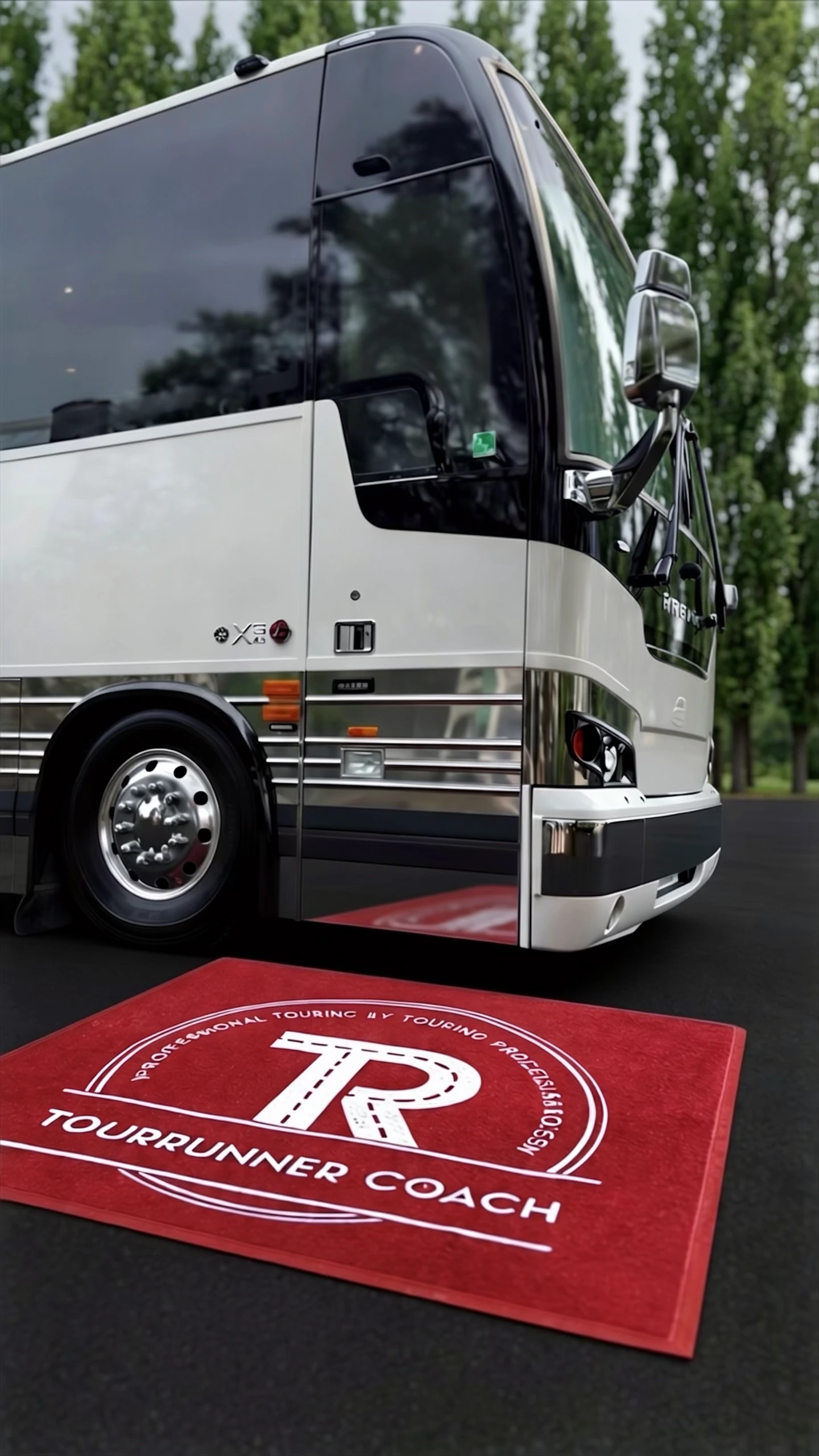
FIRST TOUR. REAL PLAN.
Let us roll out the red carpet for you…
Your first tour starts before bus call.
You have the dates. Now connect the pickups, people, gear, and miles between them. This is a practical starting point for artists, managers, and crews putting their first coach tour together—written from the road, not just the calendar.
A list of shows is the starting point. The working plan connects every pickup, load-out, overnight move, and required arrival. Here is how to put that plan together.
Turn show dates into a realistic sequence of movement
Start with the calendar, then add the moments that make it possible. A movement sheet puts route, timing, and responsibility in one view before anyone assumes an overnight drive will solve the gap.
For every date, list the city, required arrival or load-in, curfew, known parking or hotel plan, and the next required arrival. Add rehearsals, media calls, border crossings, airport runs, festival gates, and dark days. The useful question is not only ‘Can we get there?’ but ‘When does the next live obligation begin, and what must happen first?’
Include movement before the first pickup and after the final drop. An empty coach traveling from its yard to pickup still counts toward the driver’s clock. Dispatch reviews each leg against legal, rest, and multiday constraints. If the next live leg does not fit, rest, another driver, or a different movement plan must be planned rather than discovered late.
Federal passenger-carrier rules limit driving to 10 hours following 8 consecutive hours off duty and prohibit driving after 15 hours on duty. TourRunner Coach operates under the 70-hour rule: a driver may not drive after accumulating 70 on-duty hours in any 8 consecutive days. These limits are one input, not a touring template. TourRunner planning ordinarily allows a 10-hour rest window while dispatch reviews the specific duty, rest, and multiday picture.
A date list becomes tour-ready when every arrival, departure, and empty movement has a place on the same sheet.
Count people, bunks, cases, and trailer needs before choosing a setup
The coach conversation is clearer when it begins with the group and load, not a vehicle label. Headcount and gear are connected, but they are not the same question.
Separate travelers by role: artist, band, crew, management, guests, and anyone joining or leaving en route. Note who travels on each segment, not only the largest total. Then describe the load: personal bags, instruments, merch, production cases, backline, and anything needing special handling. A simple manifest prevents a late ‘we thought it would fit’ problem.
Ask early whether a trailer is part of the concept. Trailer fit depends on the gear package, loading plan, route, and operating conditions, so case counts, dimensions, and approximate weights are more useful than ‘light’ or ‘heavy.’ Flag venue access limits, festival rules, city-center restrictions, ferry needs, or other site conditions affecting the setup.
Do not use sleeping capacity as a shortcut for driver-rest assumptions. The operating plan accounts for the driver’s required off-duty conditions independently of passenger-space configuration. Discuss fleet options for the specific request rather than assuming a generic coach setup.
A usable quote starts with an honest traveler count and a clear picture of everything that must move.
See the costs attached to movement, not only the show dates
A first touring budget is strongest when it treats transportation as a route-wide operating plan. The spaces around the visible dates can affect scope just as much.
Build from first required position through final release. Include positioning or empty miles to pickup, coach reservation days, live travel days, and home or hold days between shows. A blank calendar date may still reserve a coach or require a decision about where the group, vehicle, and gear will be. Share pickup and final-drop locations especially when they differ from the first and last venue.
Identify possible route services: driver services, hotels when the driving or operating plan requires them, fuel, tolls, parking, cleaning, and venue access or staging. Ask who arranges or pays each item. The point is not to force every unknown into an early number; it is to name unknowns for the planning conversation.
Do not compare route concepts by a single day count or headline figure. An outline can omit a positioning leg, reservation day, hotel need, or parking condition. Final scope depends on the actual route, dates, operating requirements, and availability.
Budget from yard-to-pickup through final release, and make the quiet days visible early.
Give every change a clear owner before the coach rolls
Venue information changes. The goal is not to predict every change; it is to create a clean path for sharing it with people who need to act.
During advance, collect operational facts that affect arrival: address and gate, approach, load-in and soundcheck, coach parking or staging, contact roles, curfew, overnight rules, credentials, and trailer or large-vehicle restrictions. An address alone is rarely enough. Confirm whether the coach uses a separate gate, has assigned parking, or must clear the site after the show.
Choose one touring point person to consolidate updates and name a backup. The venue, tour manager, production representative, and coach contact should know where current movement information lives and who may change it. When a schedule shifts, send the working requirement: what moved, what is now required, who confirmed it, and when.
A brief daily check can catch a changed load-in, parking instruction, or media stop while there is still time to rethink movement. Keep confirmation notes with date and source so the team can distinguish a firm instruction from a preliminary suggestion.
Good advance work gives changes an owner, a timestamp, and a route back to the people moving the tour.
Plan for the human side of an onboard day
Touring puts different work styles and sleep rhythms in a shared moving space. A few expectations set before departure can make it easier to manage.
Talk through quiet hours, calls and music, food and trash, luggage placement, guests, smoking and vaping expectations, and how common areas are left after a long day. The aim is a workable group agreement, not a rigid rulebook. Name the tour manager or designated lead for routine questions before the first overnight movement.
Pack for access, not only volume. Keep performance-critical items, medication, identification, chargers, a weather layer, basic toiletries, earplugs, and a small day bag easy to reach. Keep travel documents current and accessible. Exact onboard features vary by setup, so confirm needs instead of assuming amenities.
Personal readiness supports the route plan. When everyone can find what they need for the next call, fewer urgent stops and searches are added to a tight movement day.
Shared touring works better when essentials are accessible and group expectations are stated early.
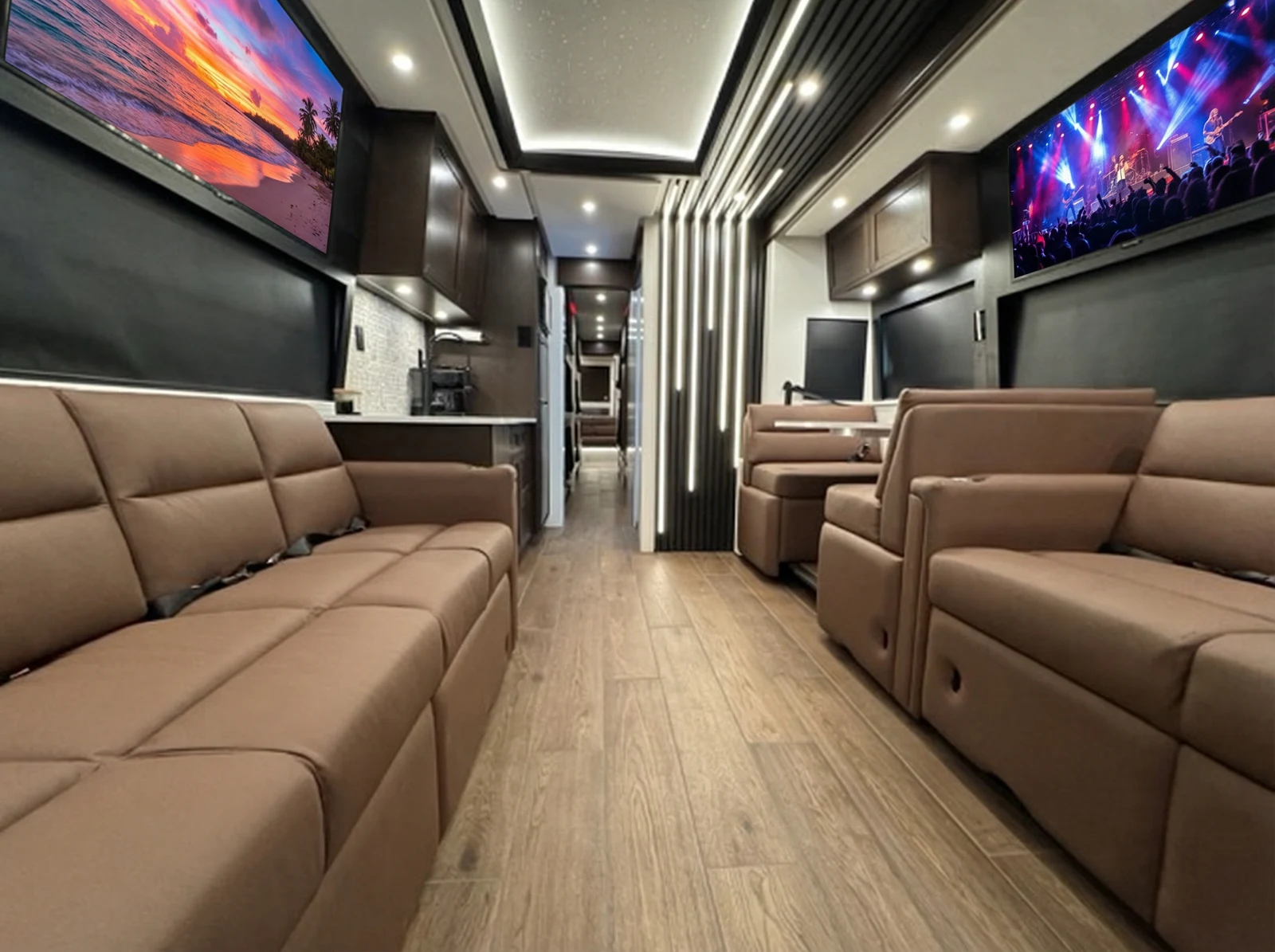
Your first conversation
Bring the basics. Flag the unknowns.
You do not need every answer to start. Send what is known and clearly mark what is still being confirmed.
Start a quote conversation →- Complete list of show, rehearsal, festival, media, and dark dates, with cities and required arrival times.
- Pickup location, first required call, final release location, and any empty positioning needs before or after the run.
- Estimated travelers by role on each route segment, including anyone joining or leaving mid-tour.
- Gear description with case counts, approximate dimensions and weights, plus any expected trailer or special-handling needs.
- Known venue advance details: loading gates, parking or staging instructions, curfews, site restrictions, and day-of contacts.
- Routing constraints or preferences such as border crossings, airport pickups, hotel expectations, ferry needs, access limits, and budget scope questions.
Get the language right
A few terms you will hear.
- Day sheet / Tour book
- A day sheet lists a touring day's schedule, locations, call times, and contacts. A tour book brings those daily plans together for the full tour.
- Positioning / Deadhead
- Travel without passengers to position a coach for pickup, its next assignment, or the return to base after the final drop.
- Live leg
- Travel with the tour's passengers onboard, as distinct from empty positioning travel.
- Advance
- The process of confirming venue, schedule, access, contact, parking, and operational details before show day.
- Hold day
- A day between active show moves when the coach may still be reserved or the route still needs a location and operating plan.
- Final release
- The defined point where the transportation assignment ends after the last required movement or drop.
Before you book
Questions worth asking.
When should we start the coach conversation?
Start with a draft date list and a sense of the group, even if venue details are developing. Early planning can expose route gaps and positioning questions. Each request is reviewed against its dates, route, operating requirements, and availability.
Can an overnight drive make every next-day load-in work?
Not automatically. Dispatch reviews the road plan against legal, rest, and multiday constraints, including preceding movement. The next live leg must fit; otherwise the plan needs rest, another driver, or a different routing decision.
What details make a quote request more useful?
Send the date run, required arrivals, pickup and release locations, traveler count by segment, gear and trailer needs, and known venue constraints. Include dark or hold days and separate airport, hotel, or rehearsal locations.
Are hotels, tolls, parking, or cleaning included?
These items depend on the route and operating plan. Name them during scope discussion so responsibilities and assumptions can be reviewed; do not assume a route-wide figure covers every venue condition or service need.
How do we keep venue changes from disrupting the route?
Use one current movement sheet, a touring point person and backup, and confirmed updates that state the new requirement, source, and timing. Earlier notice gives the team more options to assess the route.
Professional touring by touring professionals
Bring the dates. We’ll talk through the plan.
Share your dates, pickup and final-drop locations, traveler count, and gear needs. We will talk through the moving parts and what still needs to be confirmed. You do not have to have every detail settled to start the conversation.
This guide is planning information, not a quote or dispatch approval. Availability, configuration, and terms are confirmed for your specific tour.